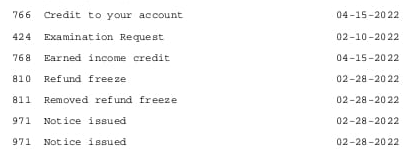
Some IRS transcript codes signal refund progress, but others mean money has been stopped in its tracks.
The 810 freeze code is one of the most stressful updates a taxpayer can see — but it doesn’t always mean something bad.
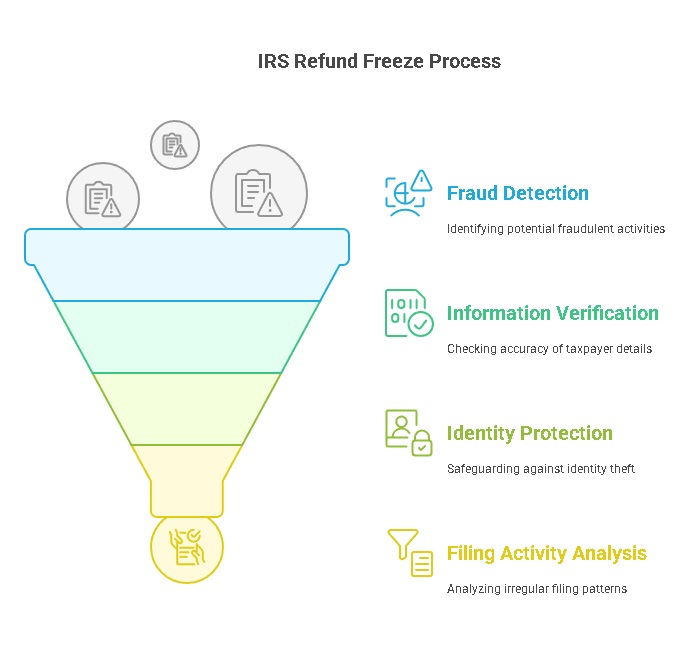
This guide explains:
- Why Code 810 appears and what it really means
- The differences between freeze and release codes
- What Code 811 + Code 971 mean after a freeze
- How to tell if you must take action vs simply wait
- The real-world timeline of a full freeze → release → refund flow
What Code 810 Really Means
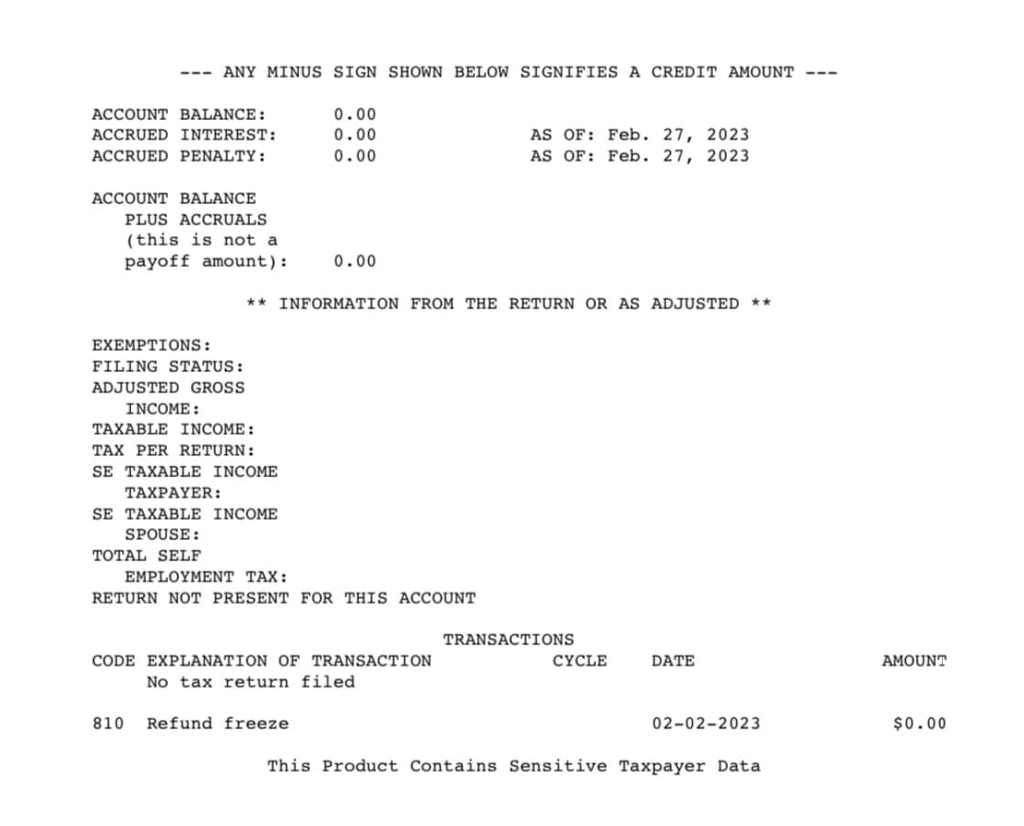
Code 810 — Refund Freeze
This is an IRS action that prevents the refund from being released until a specific issue is resolved.
Most common causes of an 810 freeze:
- Identity protection concerns (filters triggered)
- Wage/income mismatch issues
- Suspected dependent claim conflicts
- Fraud or duplicate filing signals
- Withholding/payroll inconsistencies
- Special handling of refundable credits (EITC/ACTC)
If an 810 code is present → no refund progress will occur until it clears.
Why the IRS Uses Freeze Codes
The IRS has 70+ automated flags that protect taxpayers against:
- Identity theft
- Incorrect refunds due to missing data
- Fraudulent refundable credit claims
If your return trips one, the IRS prevents the release of funds until someone verifies accuracy.
Code 811: The Official Freeze Release
Once the IRS completes its internal checks and approves your return, you should eventually see:
Code 811 — Refund Freeze Released
This is your sign that the blockage is gone and processing can continue.
810 → 811 is GOOD.
It means the IRS has validated your return.
Where Code 971 Fits Into the Freeze Timeline
Code 971 — Notice Issued
may appear:
- Before 811
- At the same time
- After the freeze clears
If paired with 811? → Notice of resolution or refund adjustment
If before 811? → IRS may need documentation from you
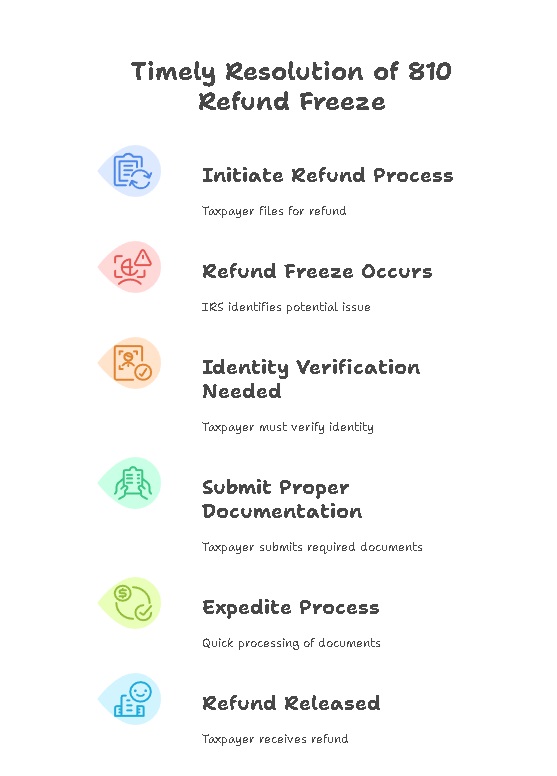
The Action Matrix (Your Processing Path)
| Transcript Flow | Meaning | Days to Correct |
|---|---|---|
| 810 → 811 → 846 | Freeze resolved successfully → Refund issued | 2–6 weeks |
| 810 → 971 → 811 → 846 | Info verified → Refund approved | 3–10 weeks |
| 810 → 971 (no 811 yet) | IRS needs info or still reviewing | 6–12+ weeks |
| 810 + 570 together | Freeze plus additional review | 8–16+ weeks |
Every IRS case is unique — timelines vary by backlog and complexity.
When Should You Contact the IRS?
You must call if:
✔ A 971 notice arrives requesting documentation
✔ No movement 60 days after an 810 freeze
✔ The refund amount changes unexpectedly
✔ A freeze code is paired with an audit indicator like Code 420
IRS Identity Verification Line: 800-830-5084
(Main IRS phone: 800-829-1040)
Bring:
- Transcript printout / Codes list
- Photo ID
- Prior-year return
Good Signs to Watch For
Positive movement includes:
- As of Date changes → processing updated
- Cycle code advances to a new processing week
- A new code appears, usually 811, 571, or 572
If Code 846 shows → refund approved!
Frequently Asked Question
Q: Can my refund skip 811 and go straight from 810 → 846?
A: Yes — rare but possible when freeze clears on the same posting cycle as refund issuance.
Summary Table
| Code | Meaning | Action Required |
|---|---|---|
| 810 | Refund frozen | Wait or verify ID if requested |
| 811 | Freeze removed | Good sign — refund moving |
| 971 | Notice issued | Only act if IRS requests response |
| 846 | Refund issued | Track your deposit |